Book Review · Bust · Favorite Authors · Gonna Need a Stiff Drink For This One · thoughts

In The Midst of Winter by Isabel Allende

in the midst of winterI can still remember reading Eva Luna in high school, buried deep under the covers and reading through the night.  Amazed that a single book could create a world so enchanting and enthralling that it literally wrapped around you in the night, I threw myself into the depths of Isabel Allende’s works; The House of the Spirits, The Stories of Eva Luna, Daughter of Fortune, Portrait in Sepia, Zorro, Ines of My Soul, Island Beneath the Sea.  For years my gypsy life consisted of moving every 6 months, and lugging around a heavy box of books filled with Allende’s works.  For me, Allende is the epitome of an author- she is the Shakespeare to my soul.  It had been several years since I’d lost myself in her world, so when In The Midst of Winter was plopped right into my hands at the library, it was like coming home.

Unfortunately, In the Midst of Winter was probably one of the worst books I’ve read in a while.  All of Allende’s trademark beautiful writing was present.  The wild women, the unlikely pairings, the incredible character development.  Missing, however, was the depth and breadth of the characters relationships with each other, the passion for life and love, and a story so hauntingly beautiful it sticks to your brain like a spiderweb.

While Allende explored the oft ignored middle ages of life and love, the effortless weaving of plausibility and magic that is key in her previous novels was missing from this story.  Richard, Lucia and Evelyn are all written with passion and a deep back story but the circumstances that bring them together are incredibly lackluster and strange.

The story uniting them left me irritated in its lack of reality, lack of depth and the lack of personal relationships developing between the characters.  At no point did I feel like Richard and Lucia were a likely or even possible romantic couple.  At no point could I feel the love or compassion Lucia had for Evelyn.  And while I enjoyed reading the individual chapters narrated by each character and thoroughly interested in the political history of Brazil, I found myself skimming the chapters devoted to the mishaps of this unlikely trio.

For a career spanning over 30 years, Allende was bound to publish a flop at some point.  It’s just hard to imagine In The Midst of Winter being written by a veteran author who penned something as magical as The House of the Spirits as her first novel.

In my devotion to Allende, I immediately checked out “The Japanese Lover” from the library, hoping to ease the disappointment of In the Midst of Winter with what I hope is a novel more aligned with Allende’s previous works.

Until next time my friends.

Happy Reading!

-R

Book Review · Gonna Need a Stiff Drink For This One · Historical Fiction · tear jerker

Before We Were Yours Part 2

After a few weeks away, I’m finally finding a spare moment to finish writing about “Before We Were Yours”.  After finishing the entire book, the main conclusion was that while the story was absolutely amazing it felt like I had just finished reading two totally separate books by two separate authors.

51P7QgQ0DjL._SX326_BO1,204,203,200_Wingate chose to tell the story through three separate characters, swapping narrators with each chapter to advance the story a bit at a time.  While this technique has been super popular lately, Wingate just didn’t nail the character development, story unraveling, or developing an equal emotional response to the narrators in the way Small Great Things, Gone Girl or Girl on the Train did.  With those novels, each of the narrating characters was equally written and developed.  It was easy to find yourself immersed completely in the thoughts and worlds of each of the narrating characters.  As mentioned in my last postBefore We We Yours felt incredibly unequal, almost like the chapters were written by different authors of very different caliber and then shuffled into place.  

As a HUGE fan of historical fiction, I felt like Wingate would have written a significantly more powerful novel if she had unraveled it bit by bit in a more traditional story telling format.  I would have even loved it if she’d stuck with alternating chapter narrations by Rills and May.  Avery was by far the least developed character, the least engaging narrator, and essentially existed as a quick device to move the story out of deeper depths.  Anytime something exciting was about to happen or some great secret was about to be revealed, the chapter ended and Wingate cut to some superficial plot line for Avery that meandered loosely back to Rills or May without ever returning to the big revelation about to be disclosed by Rills or May.  There were quite a few ambiguities and plot holes that ended up being written into this story which would not fly if Avery hadn’t been tossed in there to distract us with reminders of her privileged upbringing, prestigious pedigree and Ivy League education.

Overall, I ended up glossing through the pages narrated by Avery, and sinking my heart into the narrations by Rills and May, which tells you how necessary Avery wasn’t to the overall plot line.  I also would have appreciated more closure and finality for some of the characters who seem to ghost out of the story and are never mentioned again.  Final verdict?  5 stars for the chapters narrated by Rills and May.  1.5 stars for the chapters narrated by Avery.

Until next time,

Happy Reading!

Book Review · Gonna Need a Stiff Drink For This One · Historical Fiction · tear jerker · thoughts

Before We Were Yours by Lisa Wingate

51P7QgQ0DjL._SX326_BO1,204,203,200_Y’all…I did it again.  Went to bed w/ a new book at 8:30pm fully anticipating an hour, maybe hour and a half of reading and a reasonable bed time….and ended up reading until 1am.  Sigh…I’m so energetically sleepy it’s weird.  This must be how toddlers feel when their eyes are half closed but their body is happy dancing at top speed.  While delicious, this Green Tea is doing nothing for me.

So, during a book chat last week, a friend linked me to the Amazon Top 20 Chart last week, where I scrolled through the list looking for some new reading material.  I was surprised to find 7 Harry Potter books on the list along with the The Handmaid’s Tale.  It’s interesting to see so much Harry Potter on the list.  I remember seeing the first few books lined up together for the very first time on the library shelf like 15 or 20 years ago and thinking “holy shit, those things are HUGE”.  It’s such a strong memory, that to this day I can tell you the exact shelf and location of those books.  Weird memories aside, it’s amazing they’ve remained so popular and have really become such a normal part of the cultural sphere.  Ready Player One was also an unexpected find, but all of the movie hype has probably got this one ranking high in the charts in anticipation. Like The Martian, Ready Player One has only one real main character in the entire book.  I’m interested to see how that translates into a movie.

Having read 9 of the 20 books on this list, I started combing the library for the other 11.  Origins by Dan Brown had an 86 person wait list (what-the-what?!?!) but “Before We Were Yours” was available.  This book has been on the Amazon Top 20 for 25 weeks now, and after getting so caught up in the web Wingate has weaved, it’s easy to see why.

“Before We Were Yours” is a historical fiction based on the notorious Georgia Tann of the Tennesee Children’s Home Society.  From 1920-1950, Tann lied, schemed, plotted, and outright kidnapped the babies and children of America’s poor working class, often taking advantage of young single mothers as she procured children for her black-market baby adoption agency.  Most alarmingly, Tann had the support and cooperation of Memphis government officials, who not only knew but enabled her heinous crimes against families and children to continue for decades.

The book is written in a multiple person format, which did take some getting used to at first, particularly as the switch between characters could be jarring at times between chapters.  Interestingly enough, the story as told by Avery Stafford is stylistically written very differently than the story as told by Rill Foss and May Crandall .  It’s almost like reading two different books.  So far, I have preferred the voice and narration of Rill and May.  These characters feel very real and very grounded to me, like the author based them on someone she knew well.  The story swells and builds around Rill and May, until your heart clenches and you’re holding your breath with each page turn.

Avery, on the other hand, comes across with every stereotypical rich white-girl cliche the author could come up with.  She’s from a wealthy Southern family whose roots run deep into the political sphere.  She went to Colombia law school where she worked hard to distinguish herself from her own last name and is now a federal prosector.  The lawyer thing comes up frequently in Avery’s self monologues, like she’s reminding us over and over that she is smart and capable.  She grew up owning/riding horses and spending time with Grandma at the family beach house.    Her Daddy is an upstanding honorable man who just so happens to be a US Senator while her mother is the stereotypical overbearing Southern Belle of a Stepford wife whose organizational prowess, social standing and charity work are a force to be reckoned with.  While big things loom around her, Avery’s biggest concerns in life are missing her fiancee’s calls and dodging conversations about her wedding plans.

I’m about 75% done with the book and have been reading through Avery’s narration in anticipation of Rill’s and May’s chapters.  Looking forward to what the conclusion brings!

Happy reading,

Cheers!


Book Review · Books to Movies · children's books · Favorite Books · horchata · thoughts

Ferdinand!  Book to Movie review

ferdinand the bull book coverYou guys! So you remember how excited I was to find out Ferdinand was being made into a movie?  Well, the Little Man and I had a date to see Ferdinand last week and after a false start with a sold-out showing and calming down a pissed off child with an ice-skating adventure, we finally got to see my childhood fav up on the big screen.

Whenever a favorite book gets turned into a movie, there’s a huge chance the director will take beloved characters and plotlines and turn them on their head (HP, Twilight, I’m talking to you).  There’s also the chance the director will take the book and magically transform everything in your imagination directly onto the big screen.  Wimpy Elijah Wood as Frodo aside, Lord of the Rings was fantastic for this.  While it’s easy to see how they can turn chapter and series books into movies, it’s a bit harder to see how a director will stay true to a story from a children’s book that’s less than 20 pages, so I was very interested to see what they’d do with Ferdinand.

Let’s start this book-to-movie review with John Cena.  Despite his tough guy appeal, wrestling fame and action flicks, John Cena has always come across as the love-able meat-head, just like Ferdinand.  Celebrity crushes aside, he was absolutely, hands down, the BEST choice to voice Ferdinand.

Like the book, Ferdinand-the-movie, was based in Spain, told the tale of a gentle, flower-loving bull, involved a bee and a bull ring.  And that’s about where the similarities end.  Ferdinand-the-book is a sparse gentle tale that allows the reader to infer and imagine many things about Ferdinand, his mother, his home and his life.  So much so, that the book became controversial in its interpretations.

Ferdinand-the-movie, on the other hand, is a coming of age tale whose message of self-acceptance cannot be disputed or misinterpreted.  The movie places Ferdinand, the gentle flower loving calf, smack dab in the middle of a bull fighting farm with his father, where he is surrounded by bulls and calves determined to fight their way into the bullring.  Like the book-Ferdinand, the movie-Ferdinand is a misfit who prefers flowers to fighting, earning him the ire of the other baby bulls.

From here, the film races forward with action and adventure not found in the book, with Ferdinand eventually finding himself squaring off with El Primero, the number one matador in Spain.  Despite all of the deviations from the original tale and the addition of a weird annoying sidekick, for me, seeing Ferdinand staring into the eyes of El Primero is where Ferdinand-the-movie shows a true understanding of the character Munro Leaf created.

While I won’t be re-watching Ferdinand endlessly until the DVD just gives up like I did with Spirit: Stallion of the Cimarron, Ferdinand-the-movie was a fun afternoon adventure with my kid.  I’d def recommend it if your family, like ours, enjoys reading books and watching the movies based on those books.

Until next time, happy reading!

Cheers,

-R

Book Review · Bust · spoilers · thoughts

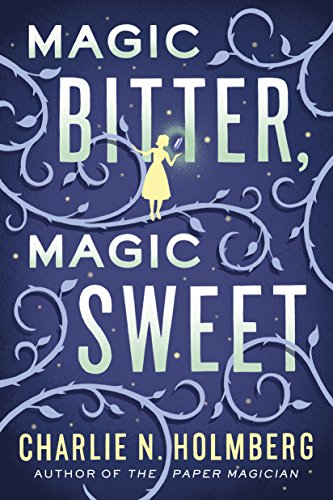
Magic Bitter, Magic Sweet


51odUtgGCTLAfter reading The Mermaid’s Sister and Son-of-Gold by Carrie Anne Noble, I dipped into an e-magazine, Deep Magic, to catch a little bit more of Noble’s writing. The magazine is a fantastic collection of magic-fantasy-type short stories and includes interviews with fantasy writers.  The length of the stories and interviews were perfect for light travel reading or a bit of a recharge between family events this week.

The June 2016 edition (the edition that included one of Noble’s short stories) included the first five chapters of Magic Bitter, Magic Sweet by Charlie N. Holmberg.  Those 5 chapters were fantastic and promised a can’t-stop-reading kind of tale.

Maire, the 24 year old main character, is found bruised and battered in the road, remembering nothing but her name.  No one knows who she is or where she comes from.  Maire spends four years in Carmine, building a life as a surrogate daughter with Arrice (her rescuer) and Arrice’s husband, Franc.

Maire’s talent lies in baking.  Her thoughts, feelings and emotions can be transposed into baked goods, allowing Maire to open a successful bakeshop in which she sells goodies laced with feelings of love, luck, endurance, strength, and hope.  The action kicks off when marauders raid the village, taking Maire and several others as captives to be sold as slaves.  After a long journey, Maire is purchased by a strange man and thus begins the descent of Magic Bitter, Magic Sweet.

Holmberg never provides a solid description of Carmine, nor the “time” in which the story takes place, leaving the story particularly ungrounded.  It takes a good portion of the book to figure out that Carmine isn’t on Earth but a small village in Di, which is part of the world Rea.  Whether Di is a country, a state, or an island, I don’t know.  How magic incorporates into this world is also frustratingly unknown, Holmberg never provides the context necessary to understand Maire’s talent or her captor’s unusual ability to travel.

As far as the marauders…we don’t know who they are, why they attacked Carmine, what they look like or even what they were doing in Carmine.  We don’t know if there was a thriving slave trade prior to the attack or if the author just needed a plot device to get Maire on the road.

The time in which Maire’s story takes place isn’t exactly clear either.  We know she’s been in Carmine for four years, but we don’t know if the tale is taking place in the past, present, or future.  The confusion with the location, the timeline and the extent of magic is compounded as Maire journeys from location to location, both with magic and on foot.

Holmberg has Maire dipping in and out of traditional fairy tales like Alice and Wonderland, The Gingerbread Man, and Hansel and Gretel as a means to explain the magical baked goods in those stories, but never completes the how and  why for Maire being involved in those stories.  They do not serve the plot line in anyway, nor do they bring any clarity on who Maire is or how those stories worked their way into our fairy tales on Earth.

Another major plot failure for me is that several other characters seem to know who or what Maire is, but are unable to tell her due to some untold “laws of the universe”.  The game of “I know but can’t tell you because the Gods will get mad at me”, gets old quick and whole chunks of the story could have been cut out to avoid these “I know everything but I can’t tell you” scenes.  Actually, thinking about it now, it’s never explained why they can’t tell Maire or who told them not to or what the consequences would have been for telling her everything right away.  Again, another plot device that helped the story limp along without providing any real substance.

*Spoilers below* (highlight to read)

Maire’s captor, Allemas, is a strange man who subjects her to unusual and inexplicable violence.  His treatment of Maire is never fully explained and at least 70% of this book could be summarized as “Beats Maire and throws her into the cellar.  Retrieves Maire from cellar so she can bake epically.  Experiences weird fit and scattered confusion.  Enacts some sort of strange cruel violence against Maire and throws her in the cellar for several days where she is starving, thirsty and recovering from wounds.  Maire sits in cellar waiting.”  This pattern of inexplicable violence and captivity got old and I ended up skipping ahead a bit to get out of the damn cellar.  

Even with the conclusion of the book, the entire character of Allemas’ remains totally unexplained.  Why did he keep changing his name?  How did he manage to retain memories of Maire while she lost all memory?  How did he learn to survive in the world with no mentioned help or friends while Maire required loving attention from Arrice and Franc to manage?  How did the traditional fairy tales incorporate into Allemas’ story? Why did Allemas treat Maire the way he did knowing what he knew about her?  Where did he learn the extreme violence?  What was he hoping to get from Maire?  How did he know she could bake?  What was going on Fyel and Allemas throughout the book?  

The worst part, for me was the sudden “breaking” of Allemas.  With no reasonable explanation or cause, he went from a dominating brutal captor who chained and beat Maire without reason into a brain-dead zombie who followed her around like a beaten dog.  And Maire, who had been held hostage by this violent stranger for 70% of the book, felt sorry for him.  What.  The.  Hell.

The script above the chapter numbers seemed to be a summary of Allemas’ thoughts, but they really added nothing to the story and actually made it harder to read, as I kept trying to figure out what the hell it all meant.

*End Spoiler*

All in all, Magic Bitter, Magic Sweet started out strong and had the bones of a great story.  Unfortunately, it was really disjointed.  If you remove the random references to fairy tales, remove the random scenes of violence and remove the “I know everything but I can’t tell you” scenes, the book doesn’t have much to stand on.  There were just too many things going on at one time that never knit the full story together.  This books gets 2.5 stars from me as well as a recommendation for some sort of warm gingery wintery cider and a supply of cookies.  The descriptions of lavender cake and gingerbread did not help curb the holiday eating at all.

Until next time,

Cheers!


beach read · Book Review · series books · Summer Read

Everything We Keep by Kerry Lonsdale

everything we keepIt’s been ages since I’ve had a chance to sit down and write anything.  Luckily, nightly reading has still been a priority and keeping me sane!

This year, I’ve been pretty obsessed with old school YA mystery like Nancy Drew and The Hardy Boys.  They’re quick, interesting, intelligent and as a bonus, the whole family enjoys the audio books.  While I do enjoy a good “adult” book now and then, the emotional strength needed for books like The Girl on the Train or Little Bee has just been too much for me this year.  Even finishing The Maze Runner series proved too much emotionally, which led to a good browsing through the Kindle Unlimited section one night and an introduction to Kerry Lonsdale, a writer from California.

Lonsdale’s debut novel, Everything We Keep, follows Aimee and her childhood sweetheart through a compelling tale of love, betrayal, mystery and self-awakening.  Lonsdale weaves a tale that is as romantic as it is mysterious.  This story twists and turns in so many delicious directions that it’s impossible to put down while the characters are so perfectly flawed that you can’t help falling in love with them.

While most series start strong and fizzle out, Everything We Left Behind was even stronger (and better) than Everything We Keep.   It feels like Lonsdale really hit her stride with Everything We Left Behind as she takes Aimee and James through a few more twists and turns.  While these books aren’t high suspense thrillers, aren’t true mysteries or even true romance novels, they do borrow a little bit from each genre to create a good story.

If you’re looking for a little down time with a book by the fire but need some space from the big emotional riveting books this Christmas break, check out Everything We Keep, Everything We Left Behind or All the Breaking Waves.

Cheers!

Book Review · Bust · Summer Read

Review of Little Wolves by Thomas Maltman

I just finished reading the 2013 novel, Little Wolves, by Thomas Maltman.  After reading, I scoped out the reviews on Amazon and was completely surprised by 2 things:

  1. the very low number of reviews on Amazon for a book that is 3 years old (only 132 at the time of writing this post)
  2. all of the 4-5 star reviews

For me, this book ranks a solid 2 stars.  It is full of inconsistencies that disjoint and disrupt the flow of the story, starting with the title itself. Little Wolves surprisingly has nothing to do with Wolves.

While it started out heavy with action (a murder-suicide), the momentum of the book quickly transitioned into a muddled collection of memories, flashbacks, references to Beowulf, random tall tales Clara remembered from her father, references to darker character histories that were never fully explained, random references to Werewolves and Wolf People, a broad parade of one-and-done characters who add nothing to the plot, all while limping along with the actual story.  It was like a high school student’s book bag exploded and the contents of every book combined in random quantities to create Little Wolves.

Writing this review, it has become apparent that the WHO and the WHAT of this book wasn’t obviously clear. Who was the main character? Clara? Seth? Grizz? Was the book about a murder-suicide and what drove a young man to commit such a heinous crime? Was it about Clara’s search for her family history? Was it a thriller about a very messed up small town that held violent secrets that everyone knew about but kept hidden?

The extent of the secrets the characters hold is never fully fleshed out and none of the character’s stories ever fleshed out into a whole tale, not to mention the endless characters parading through this book.  I couldn’t figure out why Clara’s father was obsessed with werewolf stories and keeping any information about her mother completely secret, why her husband was obsessed with seeing the Devil and what it brought to the story, why Seth did what he did, why Lee was consistently described as mentally slow but never demonstrated this trait at any point in the book, why Clara couldn’t ever find the lone mountain the city of “Lone Mountain” was named after.  Little Wolves would have been a much stronger tale with fewer characters whose back stories, relationships and purpose were more clearly defined.

To give you an idea of just how muddled this book was, I kept expecting Clair to turn into a werewolf.  Spoiler alert…she didn’t.  Bummer.  Overall, this book was a bust for me and I couldn’t strongly recommend it to anyone.

The weekend wasn’t a total HopsnLit bust, however.  After trying one for the first time this weekend, I can definitely recommend a Bellini.  Unlike Little Wolves which was dark, deep and violent and left me in a funky mood, Bellini’s are crisp, refreshing and light, and left me in a very cheerful disposition.

Until next time, happy reading.

Cheers!


beach read · Book Review · Books to Movies · children's books · Greek Mythology · Mythology · Secret Hideout · series books · Summer Read

Percy Jackson & The Olympians vs Harry Potter

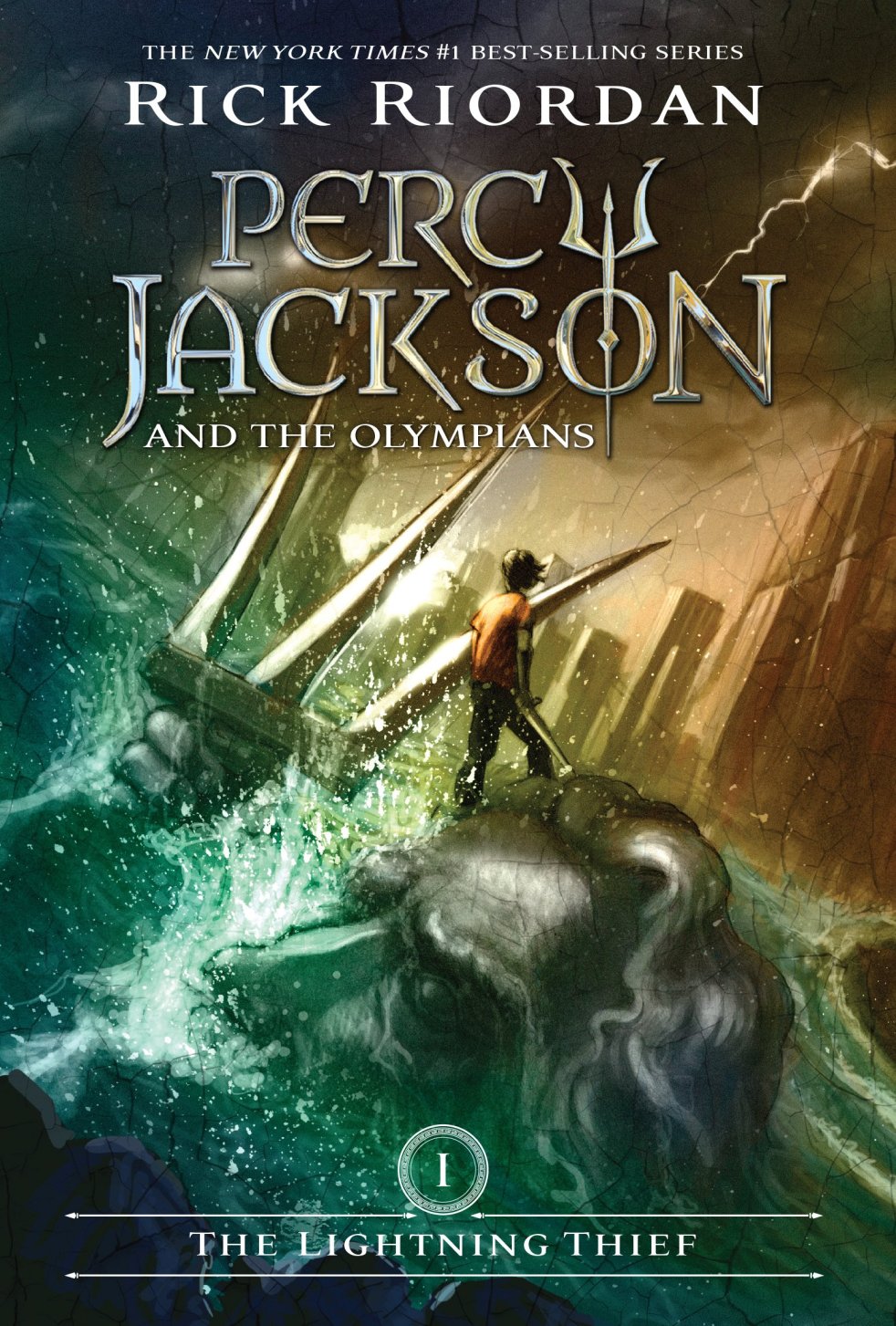
PERCY JACKSON THE LIGHTNING THIEFAnticipating a nice slow week at the beach, I set off on Amazon and Overdrive for something interesting.  I was craving something Harry Potter-esque without the deep tomes.

Cue Percy Jackson and The Olympians.

The first book in the series book popped up on my Amazon Kindle Unlimited freebies with a heading like  “If you liked Harry Potter, you may enjoy Percy Jackson.”  Amazon was right.  I absolutely enjoyed Percy Jackson and The Lightning Thief.  It was an excellent beach read that could not be put down.  I even got a sunburn because I couldn’t be bothered to move while reading!  These books are easy reading and I read the first two in two weeks.

After I’ve finished a good book, I usually head over to Amazon to check out the reviews and see if there were any insights or interesting tidbits that I missed or see if anyone else felt a certain way about this character or that event.  When skimming reviews for Percy Jackson, I was blown away by how many people felt Rick Riordan had followed a bit too closely in J.K Rowling’s footsteps.  This was interesting, because while reading the book, not once did I think “Wow..this is just like Harry Potter”.

After discussing with my favorite bibliophile, we both agreed the reviewers panning Percy Jackson as a Harry Potter knock off had done a lazy comparison of the two books.  Yes, they both involve magic.  Yes, they both have a ridiculously smart female character that the male characters depend on.  Yes, they both have a somewhat silly sidekick.  But honestly, that could be any young adult series in this genre and calling Percy Jackson a cherry pick on Harry Potter is a bit like saying The Hunger Games cherry picked from 1984 or The Maze Runner.

While the Harry Potter books derive directly from the vast imagination of their author who created an engagingly dynamic world, the PJ books overlay classical Greek mythology into modern day life.  Riordan does this incredibly well and weaves the Greek myths into a coming-of-age tale while also adding his own spin and a little bit of modernization to the personalities, stories and descriptions of the Greek Gods and mythical creatures.  His characterization of Ares, for example, as an aggressive biker thug was spot-on.   Riordan peppers the books with ancient Greek phrases that add a little dash of mysticism to the stories, while also feeling a teensy bit familiar.  I liked knowing the history and myths surrounding the Greek gods and creatures and seeing how Riordan wove them into this tale.  It’s easy to see how this series would inspire young readers to follow the PJ series with something else rooted in Greek mythology.

While there is a fair amount of magic involved in PJ, it is always limited by the original Greek myths; unlike Harry Potter, in which magic itself is a main character capable of many great and seemingly unlimited things.

Unlike Harry, who grew up an orphan with his terrible extended family, Percy has a loving mother and a distant, somewhat disappointing relationship with his father, Poseidon, the Sea God.  While Harry’s parents are lodged forever in the story as the perfect loving parents who died battling evil, Percy often grapples with anger, confusion and irritation with his missing father while balancing the usual preteen love and annoyance with his incredibly understanding and supportive mother.  Percy’s complicated relationships with his parents are handled incredibly well in an age appropriate manner that kids can relate to.  Harry’s parents, on the other hand, are put on a pedestal and frequently out of Harry’s reach, making it a bit harder to relate to that parent-child relationship.

The world J.K. Rowling created for Harry Potter was absolutely unlimited in place, description and location.  As the primary setting for the HP books, Hogwarts plays a huge role in the story of Harry Potter and with all of the quirky personality it displays, can essential be considered a character itself.  The three friends set off on the occasional adventure elsewhere, but Hogwarts occupies the majority of their adventures.

The PJ books are again limited to Greek myth and the modern world.  These books read more like the Odyssey, with Camp Half-Blood acting as a temporary home base while Percy and friends race around the world to ancient places like Mount Olympus, The Underworld, The Sea of Monsters, and the island of Polyphemus which are hidden in modern locations.  The description of LA as the secret entrance to the Underworld, for example, was particularly delicious.

And finally, we reach the comparison of Hermione to Annabeth.  Both are presented as incredibly smart and capable young ladies who seem ages older than their male counterparts.  This frequently leaves them as the voice of reason and in the case of Hermione, the default caretaker of the group.  For the most part, Hermione was a bit of a know-it-all outcast and a bit of a show-off with a chip on her shoulder.  She was frequently trying to prove herself as a Muggle Witch and maintain her place among her peers.

Annabeth, however, as the daughter of Athena, tends to show more restraint and wisdom for her age.  Her knowledge tends to show itself in her extensive planning and unlike Hermione, who tends to always be right, Annabeth has been known to falter, particularly with the Siren’s song.  Unlike Hermione who tends to always be the caretaker, Percy and Annabeth tend to share caretaker duties.  Their relationship feels a bit more equal than the relationship between Harry and Hermione.

And of course, we can’t forget about the Greek Gods who dip in and out of the PJ stories, interfering and guiding, setting traps and leaving life lines.  While Harry Potter has some minor religious undertones now and then, the PJ characters deal heavily with the presence of celestial beings.  They waiver between believing in the Gods, being a pawn of the Gods and being part of the Gods.

All in all, the PJ books are enjoyable, quick to read and I enjoyed the incorporation of the Greek Gods.  I wouldn’t classify them as anywhere near Harry Potter knockoffs, and hope those shunning this series as an HP knockoff give it another chance.

Until next time, happy reading!


ps.  Due to the fact that nectar and ambrosia kills mere mortals, a shot of Greek ouzo will do just fine.  Opa!

 

audio books · Bad Ass Women · beach read · Biography · Book Review · Comedy

Yes, Please by Amy Poehler

yes please“Famous people are never as interesting as your friends.” – Amy Poehler

While waitlisted for the library’s copy of Tina Fey’s “Bossy Pants”, I decided to check out Amy Poehler’s memoir, “Yes Please”. Poehler read her own book for the audio version, so I went into this book eager and excited to learn more about her, only to fall quickly into waiting for the good stuff. Throughout the seven hour audio book, Poehler droned endlessly through random haphazardly ordered stories and long (LONG) lists of all of the people she ever knew. Reading “Yes Please” was like reading a script while it’s still being written and simultaneously like meeting someone interesting at a party only to realize they’re incredibly boring and there’s no polite way to escape.

Poehler juggled writing “Yes Please” with caring for two kids under 6, a divorce and a busy booming career schedule. In that vein, the entire book presents itself as a half hearted attempt to write down some “funny shit” after everything else had been managed for the day. To ease some of her burden, both of her parents and Seth Meyers contribute to “Yes Please”, which felt cheap and out of place. She also started her book with an excessive amount of complaining about how hard it is to write a book.

This complaint sets the tone for the remaining pages as “I didn’t really want to do this but all of my peers wrote books, soooo….”

Poehler is a very talented and funny comedian. She has great timing and an unbelievably versatile character list. Her pro-women, live-and- let-live motto of “Good for her, not for me” felt refreshing and sincere. She’s a fantastic writer and most of the material in this book could easily be translated into hilarious skits. With that said, storytelling is not Poehler’s strong suit. The background, performance, and build-up that set a punch line on stage or studio do not translate well into print (or audio.) In fact, after skipping around the audio book and listening to the chapters recommended by Amazon reviewers, I finally hit the very last chapter, which Poehler performs in front of a live audience. While the rest of the book felt flat and annoying, her live stuff was really funny! Poehler is a comedian, not a story teller.

In general, “Yes Please” bounces around Poehler’s idyllic middle class suburban childhood to her dream job on SNL to a lovely celebrity life full of famous friends. Her parents lovingly supported her career choice of waitressing and improv. She lived happily in an unsafe Chicago neighborhood where she suffered no real misadventures or scares. She encountered no major setbacks or failures on the road to fame. She’s always been blessed with great friends, great roommates, has great kids and she is eternally grateful for her fantastic life. According to her book, the worst things Poehler has encountered thus far in life were her friendly harmless meth-addicted landlords who enjoyed cleaning, a pile of human poop on the sidewalk, and offending someone once (through no fault of her own) and then waiting five years to apologize.

Despite all of the stories shared, Poehler never shares anything intimate or personal. The pages are full of happy safe tales of no great import or consequence, making it much too long and much too vanilla.

At 329 pages, “Yes Please” could have done with some heavy editing. It also would have helped to kick out 90% of the name-dropping going on in this book. Nearly every person Poehler’s worked with (famous or not) is mentioned in this book. While SNL super fans and people familiar with the comedy circuit may enjoy these stories, it was exhausting (and BORING!) trying to keep track of who she’s talking about and who they are and why they’re even in her book.

And so my friends, I conclude these ramblings with the fact that “Yes Please” became one of about three books I just could not read all the way through. This book actually turned me off of anything Amy Poehler until the very last chapter in which her live comedic performance changed my mind. After listening to her perform live, I decided to dislike her book and how she read it, instead of just disliking all of her.

Until next time, happy reading y’all.

And if you like Amy Poehler, stay away from this book and stick to her performance stuff instead.

audio books · Book Review · Self Help

The Life Changing Magic of Tidying Up

the life changing magic of tidying upSpring time means spring cleaning!  Everywhere you look lately, “The Life Changing Magic of Tidying Up” by Marie Kondo pops up.  It’s been out for a little over 2 years now and still ranks in the Top 30 best sellers on Amazon.  It was THE number one selling book on Amazon for quite a while, and no not just books on home organization or self help but number one best seller for the entire book category.  Pinterest is on fire with Marie Kondo inspired checklists  and tutorials.  Bloggers are filling their posts with their own experiences with the method.  I first came across the book on a friend’s blog and it wasn’t until after I’d read it and started googling more, that I realized this book was even a thing.    

Parts of the book are a little eye-rolly…an 11 year old tearing through home organization magazines just didn’t sound believable, even to my 11 year old dork self.  Tales of people hoarding 200 toothbrushes and 50 million rolls of toilet paper left me with more questions than answers.  My friend Alejandra and I both had similar moments of “oh yaaaa right…” followed immediately by a text to the other to discuss.  

Despite the random “no way” moments, a lot of Kondo’s book was really valuable.  Initially, I thought Kondo’s book would help with my minimalist/OCD/own nothing/organization habits and be especially useful with the massive wardrobe curation project I’ve got going on.  And while it was totally eye opening to lay out every book I own in one place at one time, to be honest, the biggest take-aways didn’t really have much to do with stuff and were more about why we keep stuff and how we feel about our stuff.  

Kondo’s thoughts on gifts were particularly freeing.  She encourages clients to think of gifts not as physical items but as expressions of affection from the gifter.  The original intent of the gift was the expression of affection.  That purpose served, you’re free to acknowledge the affections had been expressed and move on from the gift.  Glory, hallelujah!  This little gem saved me from loads of guilt and lots of freedom from things I’d been hanging onto for years only because they were gifts.  Some of the “gifts” were even broken and I was still hanging onto them!  It also brought a fresh perspective to receiving or opening an unusual gift.  Rather than focusing on the item, it’s better to focus on the intent behind the gift.  Maybe that blender for Christmas wasn’t the perfect gift, but the love expressed by the gift totally was.  

The other really powerful tool from Kondo’s book was the thankful acknowledgement and letting go of items.  Rather than dumping things into a bag mindlessly or negatively “this is broken”, “this sucks”, “I hate this”, Kondo has clients thank each object for whatever it did for them.  “Thank you for keeping me warm”.  “Thank you for teaching me I do not actually like this style”.  This subtle mindshift from negative to positive turned the entire experience into a lovefest.  Rather than getting aggravated or overwhelmed while going through clothes or books, I was happy and relaxed.  It felt good to thank each item and move it on to its next home.  The wastefulness guilt and “what if I need it” hoarding mentality that usually damns up a good downsizing were nowhere to be found.

The mindset business really put a lot of my stuff into perspective.  Rather than wishing I had something else or living with minor annoyances all the time, I’ve spent a lot of time fixing things I already have or replacing others that just weren’t right and never would be.  I’ve started focusing on finding the right item and thinking long term instead of just going with things that will do right now.  I’ve started taking better care of the things that bring me joy and completing projects that have been sitting in the closet for ages.

The biggest impact on daily life has been adding the “thank you home” ritual to my day.  Rather than walking into a room and analyzing what has to be done, what’s missing, what’s wrong with the room, what could be improved or changed, I’ve started taking little those assessment moments to thank my home for being there, for being a safe loving place for my family to come home to.  

Even if you don’t buy into anything else in the book, practicing gratitude for what you have is a total game changer.  Give it a try and let me know how it goes.