Bad Ass Women · Favorite Books · Grab a Martini · Self Help

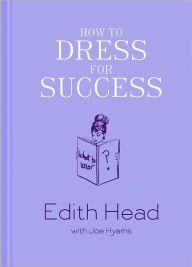
How to Dress for Success by Edith Head

how to dress for successWe’ve gotten quite a few graduation announcements and invites this year and I’ve been so excited to mail off Congratulations cards with a few little gifts tucked inside.  Of all the gifts I received over the years, there are several books that were literally life changing and would make fantastic graduation gifts.  One of those books was How to Dress for Success by Edith Head.

This book changed my entire approach to fashion, shopping, personal style and gently nudged me on the path towards minimalism.  Prior to reading this book, my closet was full of ill-fitting fast fashion, a thousand different styles for every body type but mine, and a bunch of clothes that I would never wear.  This book opened my eyes to the reality of doing more with less.  While Edith Head never even mentions the words “capsule wardrobe” or “minimalism”, the concept is clear: a few quality pieces of clothing that fit well, are well kept, and accessorized properly can make a killer wardrobe.

For those interested in classic vintage style, this book is a gold mine.  With that said, much of the book is full of old school wisdom that seems more appropriate for the 1950’s than today.  However, the concepts, ideas and suggestions are perfect for young professionals looking to make their mark as stylish and well groomed without breaking the bank.


Self Help

My Super Secret Weapon…How to Win Friends & Influence People

how to win friendsLast week I had the task of presenting to a group of people who had previously been given incorrect information about my project.  Setting the record straight is never easy and it was a daunting task that left me nervous and sweaty right up until show time.  It took me a good month to create the 30 minute presentation, which luckily, went off without a hitch.   Many of the guests thanked me afterward and their smiles and friendly conversation were a sign that the presentation had hit its mark.

When one of the guests asked for advice in her own similar campaign, I immediately recommended she read “How to Win Friends and Influence People” by Dale Carnegie.  My entire presentation was guided loosely by the advice contained in this 80 year old book, starting with “Smile” and “Remember names”.

Knowing the topic was already heated and folks were bringing reactions to previously incorrect information with them, it was particularly important to follow “The only way to get the best of an argument is to avoid it”, “let the other person save face”, and “show respect for other person’s opinions”.  Starting an argument with these folks, tossing the previous informant under the bus, or belittling their concerns would win me no friends and would definitely not earn me their trust or respect.  Instead, I used a few more of Carnegie’s timeless gems by “talking in terms of the other person’s interest” and “making the other person feel important” while also “appealing to the nobler motives”.

With the entire presentation designed to defuse the situation by avoiding being argumentative, respecting and understanding people’s current concerns and reactions, and letting them know they were important to me, I was able to get the result I wanted: an audience who had overridden incorrect information with correct information.

This book not only gave me the tools to run a smooth presentation, it changed my entire life.  By nature, I am an observer and often waited for people and things to come to me.  As you can imagine, there was a lot of disappointment in observing opportunities headed my direction only to lose them because I didn’t know how to meet those opportunities head on or blew the networking tied to those opportunities.  After reading “How to Win Friends and Influence People”, I stopped waiting for things to happen and instead applied the skills from this book to go get them or at least meet them half way.  More than any other book, I recommend everyone read this one, particularly high school students and college grads starting the interview circuit.

Until next time, happy reading!

audio books · Bad Ass Women · Biography · Books to Movies · children's books · Historical Fiction · series books · Western

Finding Minimalism on the Prairie

little house on the prairieWe tend to think of materialism and a desire to hold on to and collect physical objects as a modern day enigma, one born of mass production and fast fashion.  Imagine my surprise when this theme popped up unexpectedly in the strangest of places, the final chapters of The Little House on the Prairie.

The book ends dramatically when the Ingalls family finds their homestead, along with a few of their neighbors, is unintentionally but illegally located on Indian Land.  Rather than face the soldiers tasked with removing these settlers by force, Pa decides it’s best for the family to move along before the soldiers arrive.  As the restless spirit in the family who initiated the move out west, it’s easy to see Pa moving along without regrets.  He is akin to the modern day uber minimalist, packing furs and rifle in lieu of the mandatory modern minimalist back pack and laptop.  You can just see Pa nodding a curt goodbye to the house, the well, the garden and the year he spent building, digging, planning, planting, and trapping.  You can just see him moving along to the next adventure without a second glance.

For Ma and the girls, the disappointment is a bit thicker, but they face their reality head on with chores and no tears.  When everything they own is loaded in the wagon, Laura and Mary’s only sentimentality is a request to watch the little house disappear behind them as they roll away.  It’s hard to imagine any modern child (or adult for that matter) packing up their belongings as quickly or calmly as those two little prairie children asked to vacate their beloved home in such short order.

As the family heads towards Independence, Kansas, they come across a couple stranded in the middle of the prairie, the victims of a horse thief.  When the Ingalls family offers them a ride to Independence, the couple refuses.  They won’t leave their belongings.

Knowing full well the dangers the couple face alone in Indian Territory, Pa offers the ride multiple times, practically begging the couple to join them.   Each time, the couple refuses, opting instead to stay in the prairie with wagon full of (now useless) belongings.

As Pa drove off, burdened now with the knowledge of these people choosing to stay stranded in a very hostile land, I was left contemplating the situation.  It was impossible not to compare the stranded couple with modern Americans.

How many of us let our belongings dictate our future and hold us hostage, sometimes in dangerous territory, just so we can hold onto them?

How many of us have forgone a dream vacation or chance of a life time trip around the world because we couldn’t let go of our apartment?

How many of us have declined to take that exciting job opportunity in a field we love because it meant moving all of our belongings cross country?

How many times have our friends or family members stayed in a relationship way beyond the expiration date, simply to avoid giving up their stuff?

How many of us have taken on the burden of homes that chain us to the porch with the mortgage?

How many of us have taken on careers we actively despise or work multiple jobs so we can afford our wants?

How many of us are giving up our lives for a wagon full of useless shit?

audio books · Bad Ass Women · beach read · Biography · Book Review · Comedy

Yes, Please by Amy Poehler

yes please“Famous people are never as interesting as your friends.” – Amy Poehler

While waitlisted for the library’s copy of Tina Fey’s “Bossy Pants”, I decided to check out Amy Poehler’s memoir, “Yes Please”. Poehler read her own book for the audio version, so I went into this book eager and excited to learn more about her, only to fall quickly into waiting for the good stuff. Throughout the seven hour audio book, Poehler droned endlessly through random haphazardly ordered stories and long (LONG) lists of all of the people she ever knew. Reading “Yes Please” was like reading a script while it’s still being written and simultaneously like meeting someone interesting at a party only to realize they’re incredibly boring and there’s no polite way to escape.

Poehler juggled writing “Yes Please” with caring for two kids under 6, a divorce and a busy booming career schedule. In that vein, the entire book presents itself as a half hearted attempt to write down some “funny shit” after everything else had been managed for the day. To ease some of her burden, both of her parents and Seth Meyers contribute to “Yes Please”, which felt cheap and out of place. She also started her book with an excessive amount of complaining about how hard it is to write a book.

This complaint sets the tone for the remaining pages as “I didn’t really want to do this but all of my peers wrote books, soooo….”

Poehler is a very talented and funny comedian. She has great timing and an unbelievably versatile character list. Her pro-women, live-and- let-live motto of “Good for her, not for me” felt refreshing and sincere. She’s a fantastic writer and most of the material in this book could easily be translated into hilarious skits. With that said, storytelling is not Poehler’s strong suit. The background, performance, and build-up that set a punch line on stage or studio do not translate well into print (or audio.) In fact, after skipping around the audio book and listening to the chapters recommended by Amazon reviewers, I finally hit the very last chapter, which Poehler performs in front of a live audience. While the rest of the book felt flat and annoying, her live stuff was really funny! Poehler is a comedian, not a story teller.

In general, “Yes Please” bounces around Poehler’s idyllic middle class suburban childhood to her dream job on SNL to a lovely celebrity life full of famous friends. Her parents lovingly supported her career choice of waitressing and improv. She lived happily in an unsafe Chicago neighborhood where she suffered no real misadventures or scares. She encountered no major setbacks or failures on the road to fame. She’s always been blessed with great friends, great roommates, has great kids and she is eternally grateful for her fantastic life. According to her book, the worst things Poehler has encountered thus far in life were her friendly harmless meth-addicted landlords who enjoyed cleaning, a pile of human poop on the sidewalk, and offending someone once (through no fault of her own) and then waiting five years to apologize.

Despite all of the stories shared, Poehler never shares anything intimate or personal. The pages are full of happy safe tales of no great import or consequence, making it much too long and much too vanilla.

At 329 pages, “Yes Please” could have done with some heavy editing. It also would have helped to kick out 90% of the name-dropping going on in this book. Nearly every person Poehler’s worked with (famous or not) is mentioned in this book. While SNL super fans and people familiar with the comedy circuit may enjoy these stories, it was exhausting (and BORING!) trying to keep track of who she’s talking about and who they are and why they’re even in her book.

And so my friends, I conclude these ramblings with the fact that “Yes Please” became one of about three books I just could not read all the way through. This book actually turned me off of anything Amy Poehler until the very last chapter in which her live comedic performance changed my mind. After listening to her perform live, I decided to dislike her book and how she read it, instead of just disliking all of her.

Until next time, happy reading y’all.

And if you like Amy Poehler, stay away from this book and stick to her performance stuff instead.
audio books · Book Review · Self Help

The Life Changing Magic of Tidying Up

the life changing magic of tidying upSpring time means spring cleaning!  Everywhere you look lately, “The Life Changing Magic of Tidying Up” by Marie Kondo pops up.  It’s been out for a little over 2 years now and still ranks in the Top 30 best sellers on Amazon.  It was THE number one selling book on Amazon for quite a while, and no not just books on home organization or self help but number one best seller for the entire book category.  Pinterest is on fire with Marie Kondo inspired checklists  and tutorials.  Bloggers are filling their posts with their own experiences with the method.  I first came across the book on a friend’s blog and it wasn’t until after I’d read it and started googling more, that I realized this book was even a thing.    

Parts of the book are a little eye-rolly…an 11 year old tearing through home organization magazines just didn’t sound believable, even to my 11 year old dork self.  Tales of people hoarding 200 toothbrushes and 50 million rolls of toilet paper left me with more questions than answers.  My friend Alejandra and I both had similar moments of “oh yaaaa right…” followed immediately by a text to the other to discuss.  

Despite the random “no way” moments, a lot of Kondo’s book was really valuable.  Initially, I thought Kondo’s book would help with my minimalist/OCD/own nothing/organization habits and be especially useful with the massive wardrobe curation project I’ve got going on.  And while it was totally eye opening to lay out every book I own in one place at one time, to be honest, the biggest take-aways didn’t really have much to do with stuff and were more about why we keep stuff and how we feel about our stuff.  

Kondo’s thoughts on gifts were particularly freeing.  She encourages clients to think of gifts not as physical items but as expressions of affection from the gifter.  The original intent of the gift was the expression of affection.  That purpose served, you’re free to acknowledge the affections had been expressed and move on from the gift.  Glory, hallelujah!  This little gem saved me from loads of guilt and lots of freedom from things I’d been hanging onto for years only because they were gifts.  Some of the “gifts” were even broken and I was still hanging onto them!  It also brought a fresh perspective to receiving or opening an unusual gift.  Rather than focusing on the item, it’s better to focus on the intent behind the gift.  Maybe that blender for Christmas wasn’t the perfect gift, but the love expressed by the gift totally was.  

The other really powerful tool from Kondo’s book was the thankful acknowledgement and letting go of items.  Rather than dumping things into a bag mindlessly or negatively “this is broken”, “this sucks”, “I hate this”, Kondo has clients thank each object for whatever it did for them.  “Thank you for keeping me warm”.  “Thank you for teaching me I do not actually like this style”.  This subtle mindshift from negative to positive turned the entire experience into a lovefest.  Rather than getting aggravated or overwhelmed while going through clothes or books, I was happy and relaxed.  It felt good to thank each item and move it on to its next home.  The wastefulness guilt and “what if I need it” hoarding mentality that usually damns up a good downsizing were nowhere to be found.

The mindset business really put a lot of my stuff into perspective.  Rather than wishing I had something else or living with minor annoyances all the time, I’ve spent a lot of time fixing things I already have or replacing others that just weren’t right and never would be.  I’ve started focusing on finding the right item and thinking long term instead of just going with things that will do right now.  I’ve started taking better care of the things that bring me joy and completing projects that have been sitting in the closet for ages.

The biggest impact on daily life has been adding the “thank you home” ritual to my day.  Rather than walking into a room and analyzing what has to be done, what’s missing, what’s wrong with the room, what could be improved or changed, I’ve started taking little those assessment moments to thank my home for being there, for being a safe loving place for my family to come home to.  

Even if you don’t buy into anything else in the book, practicing gratitude for what you have is a total game changer.  Give it a try and let me know how it goes.

children's books · Favorite Books · Grandparents · library

7 Books for Grandmother’s to share with their Granddaughters

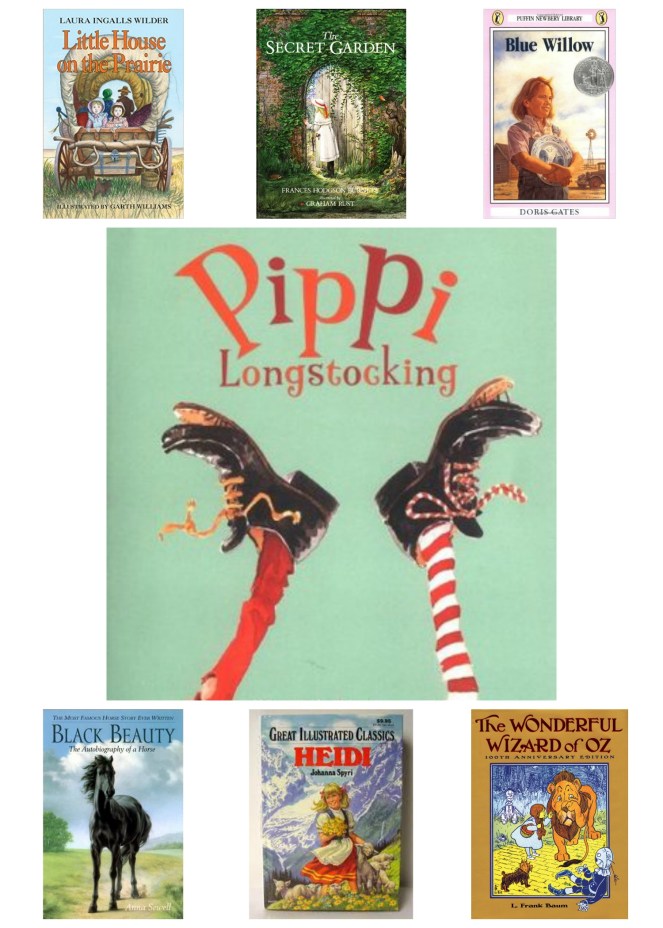
7 Books for Grandmothers to share with granddaughtersAs the one year anniversary of my Grandma’s passing creeps slowly closer, I’ve been drawn subconsciously to all things reminiscent of her.  During the months after her passing, I found myself dialing her number on the way home from work to share a funny story or searching in a drawer for the perfect postcard to mail.  Catching myself in these moments hurt deeply and I had to delete her phone number from my contacts using my laptop.  It felt too intimate, too personal somehow to do this on the phone itself.  While these moments have mercifully ceased, the other day, I found myself drawn to a section in the library that held all of the books my Grandma read with me as a little girl.

Flipping through the books, I realized that most of these books shared a common theme of strong independent girls and young women.  In her own way, Grandma was planting the seed in my mind; affirming, cultivating and accepting those traits in me.

Reading together bridged the gap between us throughout the middle school years, giving us something common to discuss during those years which are notoriously difficult and known for moving children away from their grandparents.  Reading books like the Little House on the Prairie series and Blue Willow also opened up a gateway for Grandma to share her own story and those of her parents and grandparents.  These stories fueled my (very unusual for an adolescent) passion for history, Westerns, and ancestry.

I highly recommend these 7 books for Grandmothers to share and read with their Granddaughters.  Most of these books have been adapted into movies, giving Grandmas one more activity to share with their Granddaughters after finishing the book.

  1. Pippi Longstocking by Astrid Lindgren
  2. Heidi by Johanna Spyri
  3. Black Beauty by Anna Sewell
  4. Little House on the Prairie by Laura Ingalls Wilder
  5. Blue Willow by Doris Gates
  6. The Wonderful Wizard of Oz by Frank L. Baum
  7. The Secret Garden by Frances Hodgson Burnett

Happy Reading!

p.s. These are also wonderful books for Mothers to share with their Daughters!

Books to Movies · children's books · Favorite Books · horchata · WWII

Ferdinand The Bull

ferdinand the bull book coverMy absolute favorite children’s book of all time is the 1936 classic, The Story of Ferdinand by Munro Leaf.  My grandmother read it to me as a child and I’ve read it to Huck as least 1000 times in the last few years.  History has it that Leaf wrote the story in a single afternoon as a way to help his friend, Robert Lawson, showcase his artistic talent.  The book was a hit, and at $1 per copy the 1938 sales topped those of the ever popular Gone with the Wind.  The Story of Ferdinand has never been out of print despite the many political waves this little story has caused.  1930’s America received Ferdinand in two very different facets.  Some saw the strong but gentle Ferdinand as a fascist, a pacifist, a sit-down striker, and a communist, while others received the children’s tale as story of being true to oneself.  Both receptions say more about America at that time than the story itself.

World wide, Ferdinand entered the political arena with mixed reactions.  In Spain, Ferdinand was banned as a pacifist book until the death of Francisco Franco.  Nazi Germany declared Ferdinand a symbol of democratic propaganda and ordered all copies of the book burned.  Ironically, this sweet tale was the only American children’s book sold in Stalinist-era Poland.  In 1945, following the defeat of Germany and the end of WWII, 30,000 copies of Ferdinand were published and distributed to the German children to encourage peace.

Despite all of the historical political heat, at its heart, Ferdinand is a book children will love.  This adorable tale about a strong young bull named Ferdinand who would rather sit and smell the flowers than participate in the normal young bull activities is one that children (and their parents) will relate to.  There are so many deep themes gently layered into this story: self acceptance, parental support and acceptance of a child who clearly steers away from the normal expectations, and being true to yourself despite what everyone else wants from you.  If you haven’t read it, I’d recommend borrowing your favorite child and enjoying the sweet story of Ferdinand together, especially as this classic is coming to movie screens in December.

Title: The Story of Ferdinand

Rating: 5 stars

Location best to enjoy: Snuggled in a good reading nook with your favorite child

Best Paired with: A glass of horchata 🙂


Book Stores · Old Book Smell · Secret Hideout · Wheat Beer

Researchers declare “Old Book” smell a piece of our cultural heritage

There was a bookstore in Denver, The Black & Read, that smelled absolutely uh-mazing.  As soon as you’d open the door, you’d be hit with a wave of that musty sweet clean bitter slightly pungent odor that only old books exude.  They sold records and sci-fi memorabilia too, so the smell there seemed to be overly potent.  On rainy days, I liked to pop in there and get lost in the shelves, the book smell lingering in my hair and clothes.  As a kid, I only read books that “smelled good”, re-shelving the antiseptic smelling new books in favor of those with a “good smell”.  This method led to some seriously fantastic reads.  My logic at 8 was that a book with a strong bookish aroma is usually well read, meaning it’s a book worth reading.

Houston has Half Price Books, which occasionally catches the old book scent, but it’s more like catching a hint of a favorite perfume on the wind but not knowing where it came from.  The scent there just can’t match any of those old teeny tiny tucked into a corner bookstores that used to be everywhere.  I love my Kindle, but it was a sad day when bookstores started closing and that smell started disappearing.

Turns out I’m not the only person with an affection for that musty old book smell.   Researchers at the UCL Institute for Sustainable Heritage believe  “old book” is a smell that is part of our cultural heritage.  As part of their research experiment, they asked people to describe the smell of the St Paul’s Cathedral Dean and Chapter library.  100% of the folks surveyed described the library smell as woody.  Another 86% described it as smoky.  71% described it as earthy and amazingly 41% of people described that old book library smell as vanilla!

So now that they know what it smells like, can we get someone to work on making old book scented candles?  I’m serious.

Candle wish lists aside, what causes that old book smell?  Research points to the paper, ink and binding adhesives, which give off an odor during the chemical breakdown of those components.  I prefer my 2nd grade analysis that a particularly aromatic book has a collected a lot of history in its pages and is a worthy good read.


Subject: Enjoying that distinct “Old Book” smell

Rating: 5+ stars

Best Paired with: Any of the awesome beers found at the Alien Brew Pub in Albuquerque, NM, particularly the Crop Circle Wheat

audio books · children's books · Ice-Cream Sundae · Secret Hideout · series books

Nancy Drew & The Hardy Boys

Nancy Drew the secret of the old clock book cover

My son, who we’ll call Huck in this blog, LOVES story time and was very disappointed that Mommy couldn’t read him his favorite books while driving him to school in the morning.  I attempted a few “from memory” recitations, which never quite hit the mark, before remembering my brother and I having several books on tape that we would sit and listen to over and over and over and over again.

On our next library visit, we found the “reading kits” which contain the book for the child to read and the cd for them to listen.  We picked out several and headed home.  The ride home (and all subsequent car rides for the next week) was awesome, until it became apparent we were going to listen to the same 5 min story 15 times for each car ride.

Cue the Nancy Drew audio book in the wrong location.

The bright yellow color caught Huck’s eyes and he had to have the yellow audio book.  We checked it out and were soon absorbed in a world of 1930’s American mystery.  Unlike the children’s books, this book had chapters and it took us about a week to complete.  My kid was obsessed, OBSESSED I tell you, with the mystery and we would have to sit in the car listening until we reached the end of each chapter.

At 3, I wasn’t sure he’d be able to follow such a long complex story, but he really surprised me by not only following the story, but coming up with his own ideas, conclusions and plans for catching the bad guy.  Over the next few months, we moved through the first five of the original Nancy Drew mysteries before moving on to the Hardy Boys.

Both series are very well written.  The characters are well developed and very like-able.  The plot is always intriguing and the mystery ending always attempts to be creative.  I enjoyed the timelessness of Nancy Drew.  Despite the lack of cell phones, which would have ended quite a few of her mysteries before they started, the novels never felt dated  and it was easy to relate to Nancy and her friends.  The length and complexity of the story was just right to satisfy the literary needs of both Huck and me.

Listening to these books took me straight back to third grade and I enjoyed just as much now as I did then, how Nancy, George, and Bess were presented as strong independent young women who held their own in the mystery world.  It was particularly refreshing to “read” about Nancy’s relationships with men.  The local police force, for example, respected her ideas, opinions and appreciated her assistance on cases.  Her father, a successful lawyer, encouraged Nancy to take chances and follow leads, while also backing her up when she needed it.

The Hardy Boys books are well written as well, but at times felt a bit dated, particularly when they mention money.  The Hardy Boys were also still active in their high school social life, leading to a few more characters than Nancy’s trusty sidekicks of George and Bess.  The stories were very very good but longer than the Nancy Drew mysteries and at times a little bit more complex.  While written about high schoolers, the books seem to be written for a little bit older audience that the Nancy Drew books.

Both my husband and I enjoyed listening to these mysteries with our son, and while I have a notorious affection for F-Bombs and complex tales, I enjoyed the fact that all of the language, scenarios and situations in these books were G rated.  These two series are just as good and as satisfying to read as an adult as they were as a child, and I’m rating these as 5 stars and recommending a traditional old ice cream sundae as the choice of drink while reading.

Title: The Nancy Drew Mysteries/ The Hardy Boys Mysteries

Rating: 5 stars

Location best to enjoy: Your secret hideout, a blanket fort, or the crook of a big old tree

Best Paired with: An old fashioned ice cream sundae with the works

beach read · Book Review · Fruit Beer · Historical Fiction · Sangria · Summer Read · WWII

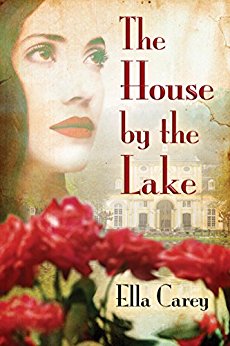
Weekend Reading: The House By the Lake

The House by the Lake - Ella Carey - Book Cover

There’s nothing quite as inexplicable as staying up all night to finish reading a good book.  It’s not like the book is going anywhere…and the story won’t change…but I still can’t put it down.

This weekend, I went on a bit of a book bender and read The House By the Lake and Everything We Keep.  A historical fiction that bounces between pre-WWII Europe and San Francisco, The House on the Lake was a quick, if not totally satisfying, read.  The story follows Anna, a successful café owner, as she journeys through pieces of her Grandfather Max’s life and attempts to patch together his life story while holding hostage her own broken heart. Continue reading “Weekend Reading: The House By the Lake”