Bad Ass Women · Favorite Authors · Historical Fiction · Politics

Renowned American Author Toni Morrison dies at age 88

This week, the literary world lost a national treasure.  Toni Morrison, the American author who gave us Beloved and Song of Solomon, passed away at age 88.

I remember reading Beloved and Song of Solomon in high school, being blown away at the depth of character and the emotional and political scope of Morrison’s works; how she blended prose with poetry with Biblical references; how her characters were “real” and so incredibly complex; how reality blended so intricately with the mystic.

Despite all of the light reading I enjoy now, I cut my teeth of books like these and I am forever grateful to authors like Morrison who give us the opportunity to step into their worlds and expand our minds and our awareness.  Morrison introduced me to an entirely different American experience and opened my eyes with her interpretation of what it meant to be Black in America.  I will be forever grateful to her for these gifts of thought and awareness.

Until next time, friends.

-R

3 stars · Book Review · Fantasy · Favorite Authors · series books

The Harbinger Series by Jeff Wheeler

Jeff Wheeler is without a doubt one of my favorite fantasy writers.  His stories are generally based on a real life historical occurrence and then fleshed out fully into a world of magic and fantasy.   His talent lies in world building and weaving his series together across centuries and worlds.  When reading anything by Wheeler, I’m dorkishly happy to find the exact moment when a completely new series with completely new characters ties seamlessly into a previous book.  I also love when a great character from another series finds their way into a new series.  Wheeler’s writing makes this incredible feat seem effortless.  Y’all know how obsessed I was with Wheeler’s works last year, and as soon as The Harbinger Series came out, I was on it.  I have been obsessively reading each book as it is released.

Unfortunately, if we’re being honest, The Harbinger Series is by far my least favorite of Wheeler’s works.  Unlike the Kingfountain Series which was a very well developed story with incredibly engaging full-bodied characters, The Harbinger Series feels like it has a lot of potential but wasn’t edited down and buttoned up.  In addition to the main characters, Cettie and Sera, there are a lot of characters and two worlds to keep track of in this series, along with monsters, politics, lost history, war, romance and friendship.  There are so many story lines running at once that the reader tends to lose and pick up the story again and again.

While Sera grows, develops and matures in a way that is consistent with her character throughout the series, Cettie changes drastically and starts making decisions that are in no way aligned with what we know her character to be.  Wheeler never fleshes out why Cettie starts behaving so oddly, so the series loses a lot of plot consistency with her waffling.  Wheeler normally writes young women well, so to see Cettie go from a strong smart young woman to a very insecure one, was terrible.

The Harbinger Series also introduces  a new type of magic that allows entire estates to float in the air.  As a reader, the floating estates caused too many issues.  I wanted to know what these estates actually looked like, how the plants managed to survive, how big they were, what the weather was like, how people got from one place to the other.  Wheeler, rather than getting into the details on these, explains them away with “it’s one of the Mysteries”.  Supposedly, no one in the entire world knows how these estates float, except when the owners go too far into debt, the estates crash back down to the ground, putting everyone below in danger.  The floating estates are also accessed by “Hurricanes”, a type of sky ship that is powered, again, by “The Mysteries”.

One of my biggest issues with The Harbinger Series is how the technology and magic doesn’t seem to align.  They have floating estates and sky ships, but not indoor plumbing.

In addition to all of the alignment and consistency issues, The Harbinger Series is darker than all of the other books, making for a very long read.

I love Jeff Wheeler and I really wanted to love the Harbinger series.  Unfortunately, it’s a 3 star rating this time.  Still a good series and good books, just not breathtaking like The Kingfountain Series.

Until next time, happy reading!

Cheers,

-R


2.5 Stars · Biography · Book Review · Bust · Summer Read

Capital Gaines: Smart Things I Learned Doing Stupid Stuff by Chip Gaines

819dCenkuML._AC_UL436_Y’all, I love me some Chip and Joanna Gaines.  But I may have overdone it by reading The Magnolia Story, the Magnolia Journal magazine, We are the Gardeners AND Capital Gaines all in about six months.

Capital Gaines is essentially The Magnolia Story written from Chip’s point of view.  There are a few new stories tossed in, more about Chip’s life pre-Joanna as well as more about his roles and goals for Magnolia, but essentially the same story told by another person.

While Joanna Gaines tends to be a gentle humble narrator, although a little boring at times, Chip Gaines is bold, loud and kind of annoying.  It took me almost two months to get through this book.  His jokes felt super immature and he came across as the kind of guy that tries really hard to be cool but ends up annoying everyone.

The hard part of this read is that while he is annoying, Chip comes across as someone who genuinely loves and cares about his family, his company, the folks who work for him, the city of Waco and about a million other things.  You want to like him!  It’s obvious he is passionate about life and holds nothing back when it comes to chasing down an idea and following through.  I can respect that and definitely admire his fearless all-in attitude.  I didn’t like the “I believe in you” and “I’m in your corner” bits.  Those portions of the book felt very forced and fake.

Capital Gaines also includes excerpts written by people who work for Chip.  It was fun to read about Chip and Joanna from their perspective as well as read about some of the crazy stuff that goes on that neither Chip or Joanna mentioned.

All in all, this books gets 2.5 stars.  While it was fun, there was nothing new or ground breaking and it felt more like a book deal cash grab contract that needed to be fulfilled.

Until next time, happy reading!

Cheers,

-R


Book Review · leadership · Self Help · Summer Read · thoughts

Start with Why

51BlNddi+NL._SX330_BO1,204,203,200_My kid was playing around on my Kindle and accidentally bought “Start with Why How Great Leaders Inspire Everyone to Take Action” by Simon Sinek.  By the time I realized how this mystery book had gotten into my kindle library, it was too late to return it.  It seemed a little like a divine universal library message,  so I took the bait and started reading Start with Why on the plane yesterday.
While it’s a little bit dry and more about marketing and business than anything else, the main point, the WHY, is really interesting.  If you enjoy reading Strengths Based Leadership and ClickStart with Why would be a good follow up read.

Sinek talks about how companies like Apple and Southwest generate a super almost cult-like loyalty in their customers and how those customers are so loyal, they will gladly pay significantly more money for a product from Apple or Southwest, because they believe in the WHY of those companies.  The interesting thing, is that the WHY for both of these companies is broad enough to allow a lot of growth and development, but focused enough to keep the companies on track.

As someone hoping to launch a small business in a very saturated market, it was a bit of a surprise to read about how chronic sales tanked GM and how typical marketing tactics tend to bring in single visit customers instead of repeat customers.  According to Sinek, a solid WHY that resounds with people is the path to repeat customers and a loyal client base.  I’m only about halfway through the book, but have found myself asking “WHY” for my job, my business, my blog, everything.  Super fun to see how a single concept can trickle down into so many different thoughts.

Until next time, happy reading and cheers!

-R

3 stars · Book Review · China · Historical Fiction · thoughts

Threads of Silk by Amanda Roberts

51b+W4jz72LHey y’all.  I’ve been digging the free monthly Amazon Kindle books lately.  I just finished reading Threads of Silk by Amanda Roberts.
This historical fiction follows Yaqian, as she makes her way from a barefoot village girl to a valued artisan living in the emperor’s service.  The political turbulence of last decades of the Chinese Qing Dynasty (late 1800’s and early 1900’s) provides the historical backdrop that make Theads of Silk so interesting.

From the beginning, Yaqian is different.  Bold and head strong, she doesn’t fit into the obedient female role predetermined to someone of her gender and station.  In an act of defiance, Yaqian begins embroidering shoes, which sell quickly and attract the attention of an embroidery master.  Yaqian is quickly whisked away to the embroidery school, where her head strong and bold personality launch her directly into the emperor’s court.  As a court artisan, Yaqian quickly becomes part of the inner circle and witnesses first hand the fall of the Qing Dynasty.

I don’t know much about Chinese history, so it was very interesting to read about life in China at the point in time.  However, it felt odd that a royal artisan would have so much involvement in so many different court happenings and be so intimately involved with the royal family.  The constant “in the right place at the right time” situations tend to jar the plausibility of the story with  as do the constant number of times Yaqian seems to be exempt from behaving in a manner of her age and station.  The story is well written and quite beautiful but it didn’t feel authentic.  At some point during the book, it became very evident that the author was not Chinese and was writing as an American woman who wanted a strong Chinese female lead character.

Overall, this was a very enjoyable read.  I learned a lot about China and enjoyed the story.  It just didn’t hit the mark for authenticity or believably.  We’ll rate this one a strong 3.5 stars.

Until next time, happy reading.

Cheers,

R


2 Stars · Book Review · Bust · Grandparents · Self Help

The Storm: How Young Men Become Good Men by Dan Blanchard

51dpXd9m+UL._SX322_BO1,204,203,200_Holy freezing in May, Batman!  The weather this month has been nuts.  I didn’t even realize it until now, but The Storm was a great title pick for the last few weeks.  We’ve gone from upper 70’s to snow and back again.  Anyway, on to The Storm: How Young Men Become Good Men by Dan Blanchard.  This was another free Amazon kindle pick and I’m undecided on whether I liked it or not.
The Storm is essentially one very long conversation between a grandfather, Granddaddy, and his teenage grandson, Dakota.  During a walk, the two take shelter in a park picnic pavilion to avoid the rain storming around them.  As they talk, Granddaddy shares his life secrets for success with Dakota, who has started learning his own lessons through trial and error.  While the premise of the book is sweet, the conversation tends to read as a giant checklist of motivational quotes and practices from every great thinker and self-help guru since the dawn of time.

The character development in The Storm is incredibly weak.  We learn that Granddaddy fought in WWII, is still married to Dakota’s grandmother and is estranged from his son, who is Dakota’s father, but we never learn much more about him than that.  We don’t know why he isn’t actively involved in Dakota’s life.  It also bothered me that despite not being around, Granddaddy and Dakota seem to have a strong and open relationship.  It also bothered me that Grandma and Mom remained vague mysterious characters who weren’t mentioned, Dad was stereotypical and Big Brother was the martyr hero type.  Not even Dakota was fleshed out.  We learn he is a high school wrestler dealing with an abusive father and has a pretty girlfriend who tends to be a positive influence.  Aside from his wrestling training and occasional references to the difficulties with his dad, Dakota remained very one dimensional and just wasn’t believable as a teenage character.

My biggest pet peeve with the entire book was how unnatural and forced the conversational style between Granddaddy and Dakota felt.  Granddaddy would ask Dakota if he knew who Michael Phelps was and instead of answering “yeah” like a normal teenager, Dakota would answer like a Wikipedia entry, “Michael Phelps is US Olympic Swimmer who won 28 medals at the 2012 and 2016 Olympics”.  Multiply that by about a hundred other anecdotes and it got old, quick.

I did enjoy a lot of the quotes in The Storm and I liked the idea of a grandparent sharing so lovingly and openly with their grandchildren.  I just wish there would have been some more personality infused into Granddady and Dakota and that their entire history and family line had been really fleshed out.

Overall, the book was a quick read, it just wasn’t very deep or life changing.  Going to rate this one somewhere around 2.5 stars.

Until next time, happy reading!

Cheers-

R


Book Review · Bust · Historical Fiction

Take 2 on Caroline: Little House Revisited

51SDPJ0Ft4L._SX330_BO1,204,203,200_It’s the end of May and I’m still wondering where the heck April blew off to.  I didn’t do much reading (or posting) in April, but I did watch a whole lot of Netflix.  It was super cold and wet here, so most of my time was spent crafting and watching The Umbrella Academy, Supergirl, The Flash, Empire Games, and probably a few more.

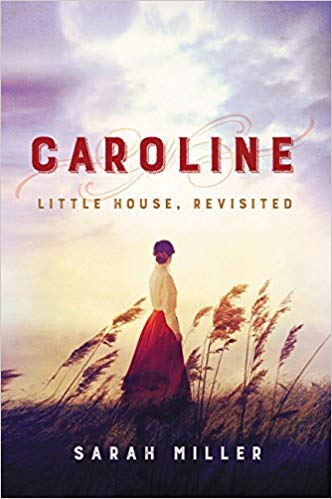
I did finish Caroline: Little House Revisited and felt like my original post could use some updating.  There is a section in Caroline, where the prairie starts on fire.  Ma is so focused on the fire that she can’t think and Miller is forced to write outside of Ma’s head.  This is where Miller really hits her stride.  Her descriptions of the prairie, the fire, the actions of the animals, the people, and the overall fire experience were excellent and very well done.  I was completely immersed in this chapter and was heavily disappointed when Miller returned to the first person narrative (which she obviously had to do in order to keep with the rest of the book.)

Caroline, in my opinion, would have been an excellent book if Miller had written exclusively in this third person style and focused more on Ma’s perspective of the Little House stories and less on creating a first person narrative which turned Ma into a boring whiny insecure Puritan.

I’m in between activities and writing on the go, so short and sweet today!

Until next time, Happy Reading!

-R


Uncategorized

Caroline: Little House, Revisited by Sarah Miller

51SDPJ0Ft4L._SX330_BO1,204,203,200_2019 has not been my favorite book year so far.  I’ve been snagging new books through the Amazon first reads program and flipping through a lot of different genres and authors.  Some, like The Storyteller’s Secret have been absolutely amazing, others like Rock Needs River have been disappointing.  Caroline: Little House, Revisited goes into the disappointing pile.  The premise of the story is absolutely irresistible for Little House lovers like me.  Caroline takes on the Little House epic through the eyes of Laura’s mother, Caroline Ingalls.

Unfortunately, Caroline is one book I’m giving up on.  Miller’s writing is downright boring.  She drowns the story in a flood of words and endless descriptions that add nothing to the story but definitely take away from it.  There were too many times I had to go back and re-read a paragraph just to figure out what started the endless paragraph in the first place.   Miller spends a lot of time on the mundane tasks and unnecessary detail.  There were whole paragraphs dedicated to pregnancy nausea, sore breasts after a day jiggling during the wagon ride, Laura and Mary needing to use the “necessary” before bed, someone always needing a chamber pot.  At the 30% mark, I decided to give up reading Caroline because the book was only about 4 days into their trip and I just couldn’t imagine following this boring tale through another day.

Miller also includes a lot of historical details that aren’t well known and create odd juxtapositions like a “corduroy bridge” and then fails to provide any context clues to help readers figure out what she’s talking about.  Apparently, corduroy bridges are a thing, but unless you’re well versed in early 19th century road history, you’re going to struggle with how a fabric type relates to a bridge.   

Boring superfluous writing aside, the worst sin in my opinion is how Miller has taken our beloved Ma, as written by Laura Ingalls Wilder, and depicted her as a boring, insecure, whiny, hyper-Puritan type who dwells on the negative.   In one story, Charles (or Pa as we know him) is teasing and flirting with Ma, to which she responds by hiding her braid so Charles can’t get worked up.  This was just so absolutely bizarre.  Ma, as written by Miller, comes across an angsty emo and it ruins the entire dynamic Laura created of Pa as the wild frontiersman and Ma as his ever ready and capable partner.

Miller has taken the fun and adventure out of the Little House stories.  0 stars.

Until next time, happy reading!

-Cheers,

R

Bad Ass Women · Book Review · Historical Fiction · WWII

The Beantown Girls by Jane Healey

91lxhcUM91L._AC_UL436_Some books are just fun to read.  The Beantown Girls is one of those books.
Written by Jane Healey The Beantown Girls takes on WWII through the eyes of the Red Cross Clubmobile Girls.  In all of my years of reading and studying WWII history, I’ve never come across anything about the Clubmobile Girls, which is an incredibly fascinating piece of American and WWII History.  The Red Cross essentially recruited attractive, outgoing, college-educated American women between the ages of 25-35.  They sent these young women to England and France during WWII to boost troop morale by serving coffee and donuts while engaging troops in lighthearted conversation.  The girls were trained to drive and maintain trucks fitted with little kitchens and often followed the troops right into the thick of things.

Healey did a fantastic job presenting the history and strength of the Clubmobile Girls while also dipping into the horrors of war that these young women actually faced.  In many ways, the Clubmobile Girls carried the same unspoken mantle that mothers, sisters and wives carry everywhere; to support our men and be strong so the men won’t fall apart.  I appreciated the way Healey wrote her female characters in a way that was both strong and vulnerable, as well as true to the times.  The girls constantly applying fresh lipstick in the midst of a war was almost comical, but also an obvious nod to how seriously they took their roles as Clubmobile Girls.

I also liked how Healey strung together several true Clubmobile Girl accounts into a single believable tale, unlike Beneath a Scarlet Sky, which placed the main character in so many events it was unbelievable.

The love story in The Beantown Girls felt like a neatly placed after thought and I think the book could have continued along smoothly without a predictable love thread being tossed in.  The book does end rather neatly, but after all the girls go through, I was rooting for them to get everything they wanted.

Great topic.  Engaging writing.  Well developed characters.  The Beantown Girls gets four stars from me and a strong recommendation for lighter WWII historical fiction.

Until next time, happy reading!

Cheers, -R

2 Stars · Autobiography · Book Review · Bust · Gonna Need a Stiff Drink For This One · thoughts

Rock Needs River by Vanessa McGrady

91TRgrrdKtL._AC_UL436_There’s nothing worse than being home sick with the flu on a beautiful day.  I did get in about a million naps and was able to finish Rock Needs River by Vanessa McGrady which had been in my list for a few weeks.

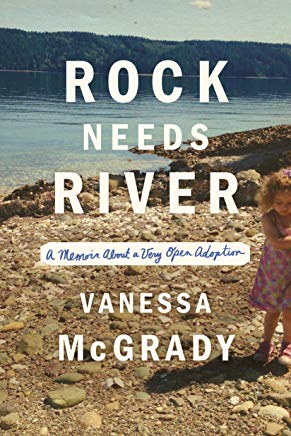
Adoption is something that has always interested me and I was hoping to learn more about the entire process, especially open adoption, which seems to be gaining more popularity as adoption becomes less stigmatized.  Unfortunately, Rock Needs River didn’t really answer any of my questions about adoption or teach the reader anything about the adoption process.  Instead, this book was a hot mess of the author oversharing other people’s lives and it was depressing to read.

McGrady spends the first part of Rock Needs River detailing her love life, failed relationships and desperation for a baby.  This portion felt a bit too personal and unfocused in the broader scope of the book.  The sections about McGrady’s family were also a bit cringe worthy and there was a bit more personal family business shared than really needed to be.

Rock Needs River switches gears about halfway with McGrady’s marriage to Peter, and the eventual birth and adoption of her daughter, Grace.  McGrady and her husband accept a last minute adoption after the birth parents pulled out of an arrangement with another potential adoptive mother, leaving them with just a few weeks to get ready for the baby.  The process of working with the adoption agency, how they found them and how they prepared mentally and emotionally for the adoption was not addressed, leaving a gaping hole in the story from “let’s adopt” to “the baby is here!”.   McGrady also glosses over the first few months to first year of Grace’s life, leaving another hole in the story for how she experienced new motherhood as an adoptive mother.  I was interested to know how this experience of having a baby two weeks after notification differed from a birth mother’s experience of mentally and emotionally preparing for nine months.  I also wanted to know how McGrady’s experience compared with maternity leave, hormones, lactation, pain, and all of the leftover physical symptoms of giving birth.

The McGrady’s and the birth parents, Bill and Bridget, choose an open adoption but never outline or define roles for how the birth parents will interact with Grace, leaving Bill and Bridget moving in and out of Grace’s life rather haphazardly.  When Bill and Bridget end up homeless, the now divorced McGrady asks them to live with her and Grace for a while.  This creates an entire situation of boundary issues, with McGrady essentially taking on a nagging disappointed mother role for two adults who can’t get themselves up to her standards.  McGrady essentially laundry lists the ways Bill and Bridget fall short of her expectations and “the real world”.  A similar approach is taken to her husband’s drinking and their subsequent divorce.

Honestly, I was so uncomfortable reading this book and couldn’t imagine how the birth parents or her ex-husband felt with all of their life history, mistakes and painful decisions laid out for strangers this way.

Despite her attempts to help them with a place to live and the occasional cash, clothes and food gifts after they leave, McGrady treats Bill and Bridget with utter disdain and disappointment.  Her expectations of a couple who knew they were not capable of the stability required to raise a child, are just astounding.  Rather than accepting the gift of her daughter and moving on with her life, McGrady inserts herself over and over again in the birth parent’s business.  Eventually, she follows them to Texas to hear their side of the story, which is disappointingly NEVER shared in this book.  Of all the things I wanted to know about this couple, their decision to give up their child and their experience of the open adoption process, was number one.  McGrady glosses over this section with a quick statement of how they felt used by the adoption agency and then runs away to take a walk.  So disappointing!

The book ends rather abruptly, without any real resolution or conclusion and utilizes an epilogue to update readers on Peter, Bridget and Bill.

After reading this book, I was so upset with how McGrady treated Bridget and Bill that I did a quick google search to see if either of them had given any interviews about the book or the adoption process.  While there wasn’t anything from either of them, I did come across McGrady’s blog.  Several of the stories in Rock Needs River were taken directly from her blog, however the tone in which they were written on the blog was beautiful and loving and a little bit confused on how she could help and what she should do, and most importantly empathetic with their struggles.  In the blog, McGrady comes across as a woman who genuinely cares about Bill and Bridget.  Unfortunately, this love and genuineness was edited out of the book.  Whoever edited Rock Needs River, did a great disservice to McGrady, Bill, Bridget, Grace and the reader.

All in all, 2 stars.

Until next time, Cheers and happy reading!

-R