Book Review · Bust · Summer Read

Review of Little Wolves by Thomas Maltman

I just finished reading the 2013 novel, Little Wolves, by Thomas Maltman.  After reading, I scoped out the reviews on Amazon and was completely surprised by 2 things:

  1. the very low number of reviews on Amazon for a book that is 3 years old (only 132 at the time of writing this post)
  2. all of the 4-5 star reviews

For me, this book ranks a solid 2 stars.  It is full of inconsistencies that disjoint and disrupt the flow of the story, starting with the title itself. Little Wolves surprisingly has nothing to do with Wolves.

While it started out heavy with action (a murder-suicide), the momentum of the book quickly transitioned into a muddled collection of memories, flashbacks, references to Beowulf, random tall tales Clara remembered from her father, references to darker character histories that were never fully explained, random references to Werewolves and Wolf People, a broad parade of one-and-done characters who add nothing to the plot, all while limping along with the actual story.  It was like a high school student’s book bag exploded and the contents of every book combined in random quantities to create Little Wolves.

Writing this review, it has become apparent that the WHO and the WHAT of this book wasn’t obviously clear. Who was the main character? Clara? Seth? Grizz? Was the book about a murder-suicide and what drove a young man to commit such a heinous crime? Was it about Clara’s search for her family history? Was it a thriller about a very messed up small town that held violent secrets that everyone knew about but kept hidden?

The extent of the secrets the characters hold is never fully fleshed out and none of the character’s stories ever fleshed out into a whole tale, not to mention the endless characters parading through this book.  I couldn’t figure out why Clara’s father was obsessed with werewolf stories and keeping any information about her mother completely secret, why her husband was obsessed with seeing the Devil and what it brought to the story, why Seth did what he did, why Lee was consistently described as mentally slow but never demonstrated this trait at any point in the book, why Clara couldn’t ever find the lone mountain the city of “Lone Mountain” was named after.  Little Wolves would have been a much stronger tale with fewer characters whose back stories, relationships and purpose were more clearly defined.

To give you an idea of just how muddled this book was, I kept expecting Clair to turn into a werewolf.  Spoiler alert…she didn’t.  Bummer.  Overall, this book was a bust for me and I couldn’t strongly recommend it to anyone.

The weekend wasn’t a total HopsnLit bust, however.  After trying one for the first time this weekend, I can definitely recommend a Bellini.  Unlike Little Wolves which was dark, deep and violent and left me in a funky mood, Bellini’s are crisp, refreshing and light, and left me in a very cheerful disposition.

Until next time, happy reading.

Cheers!


beach read · Book Review · Books to Movies · children's books · Greek Mythology · Mythology · Secret Hideout · series books · Summer Read

Percy Jackson & The Olympians vs Harry Potter

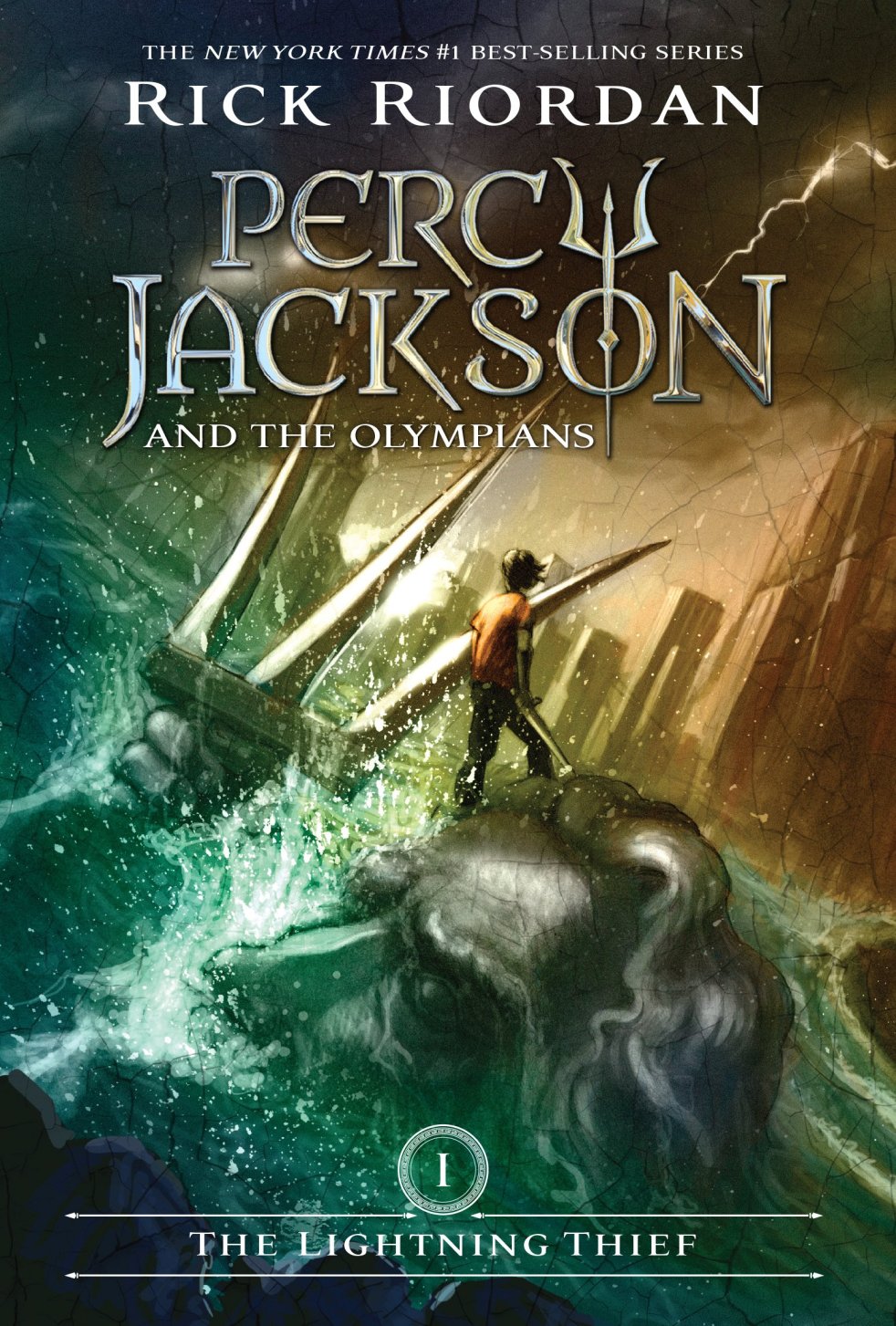
PERCY JACKSON THE LIGHTNING THIEFAnticipating a nice slow week at the beach, I set off on Amazon and Overdrive for something interesting.  I was craving something Harry Potter-esque without the deep tomes.

Cue Percy Jackson and The Olympians.

The first book in the series book popped up on my Amazon Kindle Unlimited freebies with a heading like  “If you liked Harry Potter, you may enjoy Percy Jackson.”  Amazon was right.  I absolutely enjoyed Percy Jackson and The Lightning Thief.  It was an excellent beach read that could not be put down.  I even got a sunburn because I couldn’t be bothered to move while reading!  These books are easy reading and I read the first two in two weeks.

After I’ve finished a good book, I usually head over to Amazon to check out the reviews and see if there were any insights or interesting tidbits that I missed or see if anyone else felt a certain way about this character or that event.  When skimming reviews for Percy Jackson, I was blown away by how many people felt Rick Riordan had followed a bit too closely in J.K Rowling’s footsteps.  This was interesting, because while reading the book, not once did I think “Wow..this is just like Harry Potter”.

After discussing with my favorite bibliophile, we both agreed the reviewers panning Percy Jackson as a Harry Potter knock off had done a lazy comparison of the two books.  Yes, they both involve magic.  Yes, they both have a ridiculously smart female character that the male characters depend on.  Yes, they both have a somewhat silly sidekick.  But honestly, that could be any young adult series in this genre and calling Percy Jackson a cherry pick on Harry Potter is a bit like saying The Hunger Games cherry picked from 1984 or The Maze Runner.

While the Harry Potter books derive directly from the vast imagination of their author who created an engagingly dynamic world, the PJ books overlay classical Greek mythology into modern day life.  Riordan does this incredibly well and weaves the Greek myths into a coming-of-age tale while also adding his own spin and a little bit of modernization to the personalities, stories and descriptions of the Greek Gods and mythical creatures.  His characterization of Ares, for example, as an aggressive biker thug was spot-on.   Riordan peppers the books with ancient Greek phrases that add a little dash of mysticism to the stories, while also feeling a teensy bit familiar.  I liked knowing the history and myths surrounding the Greek gods and creatures and seeing how Riordan wove them into this tale.  It’s easy to see how this series would inspire young readers to follow the PJ series with something else rooted in Greek mythology.

While there is a fair amount of magic involved in PJ, it is always limited by the original Greek myths; unlike Harry Potter, in which magic itself is a main character capable of many great and seemingly unlimited things.

Unlike Harry, who grew up an orphan with his terrible extended family, Percy has a loving mother and a distant, somewhat disappointing relationship with his father, Poseidon, the Sea God.  While Harry’s parents are lodged forever in the story as the perfect loving parents who died battling evil, Percy often grapples with anger, confusion and irritation with his missing father while balancing the usual preteen love and annoyance with his incredibly understanding and supportive mother.  Percy’s complicated relationships with his parents are handled incredibly well in an age appropriate manner that kids can relate to.  Harry’s parents, on the other hand, are put on a pedestal and frequently out of Harry’s reach, making it a bit harder to relate to that parent-child relationship.

The world J.K. Rowling created for Harry Potter was absolutely unlimited in place, description and location.  As the primary setting for the HP books, Hogwarts plays a huge role in the story of Harry Potter and with all of the quirky personality it displays, can essential be considered a character itself.  The three friends set off on the occasional adventure elsewhere, but Hogwarts occupies the majority of their adventures.

The PJ books are again limited to Greek myth and the modern world.  These books read more like the Odyssey, with Camp Half-Blood acting as a temporary home base while Percy and friends race around the world to ancient places like Mount Olympus, The Underworld, The Sea of Monsters, and the island of Polyphemus which are hidden in modern locations.  The description of LA as the secret entrance to the Underworld, for example, was particularly delicious.

And finally, we reach the comparison of Hermione to Annabeth.  Both are presented as incredibly smart and capable young ladies who seem ages older than their male counterparts.  This frequently leaves them as the voice of reason and in the case of Hermione, the default caretaker of the group.  For the most part, Hermione was a bit of a know-it-all outcast and a bit of a show-off with a chip on her shoulder.  She was frequently trying to prove herself as a Muggle Witch and maintain her place among her peers.

Annabeth, however, as the daughter of Athena, tends to show more restraint and wisdom for her age.  Her knowledge tends to show itself in her extensive planning and unlike Hermione, who tends to always be right, Annabeth has been known to falter, particularly with the Siren’s song.  Unlike Hermione who tends to always be the caretaker, Percy and Annabeth tend to share caretaker duties.  Their relationship feels a bit more equal than the relationship between Harry and Hermione.

And of course, we can’t forget about the Greek Gods who dip in and out of the PJ stories, interfering and guiding, setting traps and leaving life lines.  While Harry Potter has some minor religious undertones now and then, the PJ characters deal heavily with the presence of celestial beings.  They waiver between believing in the Gods, being a pawn of the Gods and being part of the Gods.

All in all, the PJ books are enjoyable, quick to read and I enjoyed the incorporation of the Greek Gods.  I wouldn’t classify them as anywhere near Harry Potter knockoffs, and hope those shunning this series as an HP knockoff give it another chance.

Until next time, happy reading!


ps.  Due to the fact that nectar and ambrosia kills mere mortals, a shot of Greek ouzo will do just fine.  Opa!

 

audio books · Bad Ass Women · beach read · Biography · Book Review · Comedy

Yes, Please by Amy Poehler

yes please“Famous people are never as interesting as your friends.” – Amy Poehler

While waitlisted for the library’s copy of Tina Fey’s “Bossy Pants”, I decided to check out Amy Poehler’s memoir, “Yes Please”. Poehler read her own book for the audio version, so I went into this book eager and excited to learn more about her, only to fall quickly into waiting for the good stuff. Throughout the seven hour audio book, Poehler droned endlessly through random haphazardly ordered stories and long (LONG) lists of all of the people she ever knew. Reading “Yes Please” was like reading a script while it’s still being written and simultaneously like meeting someone interesting at a party only to realize they’re incredibly boring and there’s no polite way to escape.

Poehler juggled writing “Yes Please” with caring for two kids under 6, a divorce and a busy booming career schedule. In that vein, the entire book presents itself as a half hearted attempt to write down some “funny shit” after everything else had been managed for the day. To ease some of her burden, both of her parents and Seth Meyers contribute to “Yes Please”, which felt cheap and out of place. She also started her book with an excessive amount of complaining about how hard it is to write a book.

This complaint sets the tone for the remaining pages as “I didn’t really want to do this but all of my peers wrote books, soooo….”

Poehler is a very talented and funny comedian. She has great timing and an unbelievably versatile character list. Her pro-women, live-and- let-live motto of “Good for her, not for me” felt refreshing and sincere. She’s a fantastic writer and most of the material in this book could easily be translated into hilarious skits. With that said, storytelling is not Poehler’s strong suit. The background, performance, and build-up that set a punch line on stage or studio do not translate well into print (or audio.) In fact, after skipping around the audio book and listening to the chapters recommended by Amazon reviewers, I finally hit the very last chapter, which Poehler performs in front of a live audience. While the rest of the book felt flat and annoying, her live stuff was really funny! Poehler is a comedian, not a story teller.

In general, “Yes Please” bounces around Poehler’s idyllic middle class suburban childhood to her dream job on SNL to a lovely celebrity life full of famous friends. Her parents lovingly supported her career choice of waitressing and improv. She lived happily in an unsafe Chicago neighborhood where she suffered no real misadventures or scares. She encountered no major setbacks or failures on the road to fame. She’s always been blessed with great friends, great roommates, has great kids and she is eternally grateful for her fantastic life. According to her book, the worst things Poehler has encountered thus far in life were her friendly harmless meth-addicted landlords who enjoyed cleaning, a pile of human poop on the sidewalk, and offending someone once (through no fault of her own) and then waiting five years to apologize.

Despite all of the stories shared, Poehler never shares anything intimate or personal. The pages are full of happy safe tales of no great import or consequence, making it much too long and much too vanilla.

At 329 pages, “Yes Please” could have done with some heavy editing. It also would have helped to kick out 90% of the name-dropping going on in this book. Nearly every person Poehler’s worked with (famous or not) is mentioned in this book. While SNL super fans and people familiar with the comedy circuit may enjoy these stories, it was exhausting (and BORING!) trying to keep track of who she’s talking about and who they are and why they’re even in her book.

And so my friends, I conclude these ramblings with the fact that “Yes Please” became one of about three books I just could not read all the way through. This book actually turned me off of anything Amy Poehler until the very last chapter in which her live comedic performance changed my mind. After listening to her perform live, I decided to dislike her book and how she read it, instead of just disliking all of her.

Until next time, happy reading y’all.

And if you like Amy Poehler, stay away from this book and stick to her performance stuff instead.

audio books · Book Review · Self Help

The Life Changing Magic of Tidying Up

the life changing magic of tidying upSpring time means spring cleaning!  Everywhere you look lately, “The Life Changing Magic of Tidying Up” by Marie Kondo pops up.  It’s been out for a little over 2 years now and still ranks in the Top 30 best sellers on Amazon.  It was THE number one selling book on Amazon for quite a while, and no not just books on home organization or self help but number one best seller for the entire book category.  Pinterest is on fire with Marie Kondo inspired checklists  and tutorials.  Bloggers are filling their posts with their own experiences with the method.  I first came across the book on a friend’s blog and it wasn’t until after I’d read it and started googling more, that I realized this book was even a thing.    
Parts of the book are a little eye-rolly…an 11 year old tearing through home organization magazines just didn’t sound believable, even to my 11 year old dork self.  Tales of people hoarding 200 toothbrushes and 50 million rolls of toilet paper left me with more questions than answers.  My friend Alejandra and I both had similar moments of “oh yaaaa right…” followed immediately by a text to the other to discuss.  

Despite the random “no way” moments, a lot of Kondo’s book was really valuable.  Initially, I thought Kondo’s book would help with my minimalist/OCD/own nothing/organization habits and be especially useful with the massive wardrobe curation project I’ve got going on.  And while it was totally eye opening to lay out every book I own in one place at one time, to be honest, the biggest take-aways didn’t really have much to do with stuff and were more about why we keep stuff and how we feel about our stuff.  

Kondo’s thoughts on gifts were particularly freeing.  She encourages clients to think of gifts not as physical items but as expressions of affection from the gifter.  The original intent of the gift was the expression of affection.  That purpose served, you’re free to acknowledge the affections had been expressed and move on from the gift.  Glory, hallelujah!  This little gem saved me from loads of guilt and lots of freedom from things I’d been hanging onto for years only because they were gifts.  Some of the “gifts” were even broken and I was still hanging onto them!  It also brought a fresh perspective to receiving or opening an unusual gift.  Rather than focusing on the item, it’s better to focus on the intent behind the gift.  Maybe that blender for Christmas wasn’t the perfect gift, but the love expressed by the gift totally was.  

The other really powerful tool from Kondo’s book was the thankful acknowledgement and letting go of items.  Rather than dumping things into a bag mindlessly or negatively “this is broken”, “this sucks”, “I hate this”, Kondo has clients thank each object for whatever it did for them.  “Thank you for keeping me warm”.  “Thank you for teaching me I do not actually like this style”.  This subtle mindshift from negative to positive turned the entire experience into a lovefest.  Rather than getting aggravated or overwhelmed while going through clothes or books, I was happy and relaxed.  It felt good to thank each item and move it on to its next home.  The wastefulness guilt and “what if I need it” hoarding mentality that usually damns up a good downsizing were nowhere to be found.

The mindset business really put a lot of my stuff into perspective.  Rather than wishing I had something else or living with minor annoyances all the time, I’ve spent a lot of time fixing things I already have or replacing others that just weren’t right and never would be.  I’ve started focusing on finding the right item and thinking long term instead of just going with things that will do right now.  I’ve started taking better care of the things that bring me joy and completing projects that have been sitting in the closet for ages.

The biggest impact on daily life has been adding the “thank you home” ritual to my day.  Rather than walking into a room and analyzing what has to be done, what’s missing, what’s wrong with the room, what could be improved or changed, I’ve started taking little those assessment moments to thank my home for being there, for being a safe loving place for my family to come home to.  

Even if you don’t buy into anything else in the book, practicing gratitude for what you have is a total game changer.  Give it a try and let me know how it goes.

beach read · Book Review · Fruit Beer · Historical Fiction · Sangria · Summer Read · WWII

Weekend Reading: The House By the Lake

The House by the Lake - Ella Carey - Book Cover

There’s nothing quite as inexplicable as staying up all night to finish reading a good book.  It’s not like the book is going anywhere…and the story won’t change…but I still can’t put it down.

This weekend, I went on a bit of a book bender and read The House By the Lake and Everything We Keep.  A historical fiction that bounces between pre-WWII Europe and San Francisco, The House on the Lake was a quick, if not totally satisfying, read.  The story follows Anna, a successful café owner, as she journeys through pieces of her Grandfather Max’s life and attempts to patch together his life story while holding hostage her own broken heart. Continue reading “Weekend Reading: The House By the Lake”